 Pakistan
 USA
 Canada
 UK
 Dubai
 Australia
 Germany


- Buyers search by product and spec.
- Show capability, certifications and process.
- Technical SEO matters for overseas visitors.
How buyers search for manufacturers
Procurement teams search with terms such as "football manufacturer", "surgical instruments supplier", "OEM leather jackets" and "custom sportswear factory". They add country, standard or material words. They also search for specific product codes and specifications. If your site does not target those phrases, it will not be shortlisted.
Build product pages that sell
Each product category needs a page with clear specifications, materials, sizes, customisation options, MOQ, lead times and packaging. Add images from your own production, downloadable datasheets and a short enquiry form. Avoid copying descriptions from catalogues, because duplicate text rarely ranks.
Prove capability and compliance
Show certifications such as ISO standards, audit reports, test results and compliance statements relevant to your buyers. Include factory photos, machinery lists and quality control steps. This evidence moves buyers from interested to confident.
Technical SEO for export sites
Fast loading from overseas matters. Use quality hosting or a CDN, compress images and keep the site lightweight. Add schema for organisations and products, an XML sitemap and a clean URL structure. If you target several languages or countries, implement hreflang correctly.
Authority for B2B
Earn links from trade associations, industry directories, chambers of commerce, trade-show pages and publications. Case studies with named clients, where allowed, add credibility. Avoid mass directory submissions that bring no real buyers.
Track enquiries to orders
Add forms and WhatsApp buttons with source tracking. Record each enquiry in a simple CRM and note which became samples and orders. Over time you will see which products and countries generate revenue. Our SEO services in Sialkot, SEO for Sialkot exporters and marketing for manufacturers pages explain more.
Keyword examples for Sialkot industries
For sports goods, think football manufacturer, cricket equipment supplier, boxing gloves OEM and custom team wear. For surgical instruments, think dental instruments manufacturer, orthopaedic instruments supplier and ISO 13485 surgical instruments. For leather goods, think leather jackets manufacturer, motorbike leather suits and private-label leather gloves. Pair these with buyer-country terms when relevant.
Each cluster deserves its own pages and supporting content, such as customisation guides, material comparisons and compliance explainers.
Language, trust and communication
Overseas buyers value clear English, professional photography and quick responses. A contact page should list a direct email, a WhatsApp number and office hours with time-zone information. Samples, tech packs and production timelines should be described plainly. Consider adding German, French, Arabic or Spanish pages if you serve those markets.
Manufacturer search: local suppliers and global buyers
See SEO for Sialkot exporters for export tactics.
Locally
- Local agents and distributors search by product
- Catalogue clarity wins enquiries
- Maps listing for factory
Internationally
- Importers search by specification
- Certifications and testing
- RFQ forms and sample policy
Combining SEO with other channels
SEO works well with trade-show follow-up and B2B marketplaces. After meeting a buyer, direct them to your product pages and case studies. Use LinkedIn to share production stories and certifications. Where you need leads quickly, test Google Ads with country targeting; see PPC expert in Sialkot. For the broader plan, visit digital marketing agency in Sialkot.
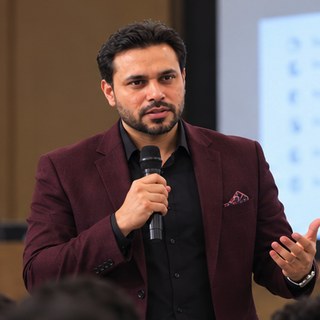
My advice to manufacturers
Buyers want proof you can deliver. I would put certifications, capacity, process photos and a clear RFQ form ahead of long marketing copy.
- My suggestion: build one page per product line.
- Reply to every enquiry within a day.
Common mistakes Sialkot manufacturers make online
Typical mistakes include a website that is only a brochure, product lists as images without text, no certifications shown, slow servers, contact forms that fail silently and no tracking. Some companies list hundreds of products under one page with no structure, which prevents rankings. Others rely on third-party marketplaces and have no independent web presence, leaving them dependent on fees and rules they do not control.
Fixing these is rarely expensive. A well-structured catalogue, honest specifications and reliable enquiry handling often outperform expensive but unfocused campaigns.
A realistic timeline
Months one and two: audit, keyword research, site structure and content plan. Months three and four: product and capability pages published, technical fixes complete, first links earned. Months five and six: rankings begin to move for long-tail supplier searches and first enquiries arrive. Beyond that: expand categories, languages and content depth. Results vary with competition, so a good provider will agree milestones rather than make promises.
How we handle this for clients
For a Sialkot manufacturer, we begin with the products that earn the strongest margin and the export markets the factory already ships to. We search those products the way a foreign buyer would and note who appears: rival factories, marketplaces or distributors. Then we compare their product pages with the client's own, looking at specifications, photos, certification evidence and how easy it is to send an enquiry. That gap analysis decides which categories we work on first.
We then build or rewrite category pages with the factory's own production details, and set up enquiry tracking so each request is tagged by product and country. Where useful, we arrange a visit to the factory from our Lahore office to gather photos and process information that competitors cannot copy. Reports show which products and markets are producing enquiries, which pages need more proof and which new categories are worth adding next.

Junaid has worked in SEO, paid media, web development and custom software for more than 18 years. He founded SEOnumber1, builds WordPress plugins, CRMs and web applications, has served 500+ clients in 48 countries, and holds Google Ads, Analytics and Google Blue and Green Belt certifications. He is a National Level Award Winner in Digital Marketing. Read his story or ask a question about this article.